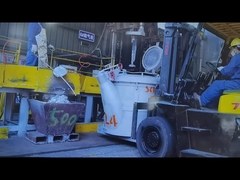
Brief: From concept to demonstration, this video highlights the evolution and practical outcomes of aluminium scrap sorting technology. You'll see how modern recycling facilities use equipment like eddy current separators and LIBS systems to efficiently separate aluminium from mixed materials and sort different alloys, maximizing recycling rates and economic value.
Related Product Features:
Eddy current separators use high-speed magnetic rotors to repel non-ferrous metals like aluminium from mixed waste streams.
Sensor-based sorters with NIR and color recognition provide high-precision separation of aluminium from contaminants and other metals.
Laser-Induced Breakdown Spectroscopy (LIBS) offers ultra-high-purity alloy sorting by analyzing elemental composition via laser plasma.
X-Ray Fluorescence (XRF) technology enables elemental analysis for quality control and alloy identification on larger scrap pieces.
Pre-sorting equipment like shredders and trommel screens prepare scrap by reducing size and removing dirt and small contaminants.
Density separators use controlled airflow to separate light materials from heavier metals like aluminium in bulk pre-sorting stages.
AI and deep learning enhance sensor sorter accuracy for handling complex and contaminated aluminium scrap streams.
Robotic sorting systems with vision and spectroscopic sensors pick specific aluminium items from conveyors for pre-sorting or quality control.
Faqs:
What is the primary technology used for bulk aluminium recovery from mixed scrap?
Eddy current separators are the workhorse for bulk aluminium recovery, using a magnetic rotor to induce opposing magnetic fields in non-ferrous metals, effectively separating them from inert materials like plastic and glass.
How do advanced systems separate different aluminium alloys for high-value recycling?
Laser-Induced Breakdown Spectroscopy (LIBS) is the gold standard for alloy sorting, using a high-powered laser to create plasma from the metal surface and analyzing its light spectrum to determine exact elemental composition, enabling precise separation of alloys like 6061 and 3003.
What role does artificial intelligence play in modern aluminium sorting equipment?
AI and deep learning are integrated into sensor sorters to improve recognition accuracy over time, allowing the systems to better handle complex and contaminated scrap streams and adapt to varying material compositions.